
In the landscape of modern Java Development, the ability to write non-blocking, asynchronous code is no longer a luxury—it is a necessity. As applications shift from monolithic architectures to distributed Java Microservices, the cost of blocking threads while waiting for I/O operations (like database queries or REST API calls) becomes a primary bottleneck for Java Scalability. While Java Threads have been part of the language since its inception, managing them manually is error-prone and resource-intensive.
Enter CompletableFuture. Introduced in Java 8 and significantly improved in Java 9, Java 17, and Java 21, this class revolutionized Java Concurrency. It allows developers to write complex, non-blocking pipelines in a declarative, Functional Java style. Unlike the older Future interface, which required blocking to retrieve a result, CompletableFuture pushes data through a pipeline of callbacks, making it a cornerstone of high-performance Java Backend systems, including those built with Spring Boot and Jakarta EE.
In this comprehensive guide, we will dive deep into Java Advanced concurrency patterns. We will explore how to compose asynchronous tasks, handle exceptions gracefully, optimize Java Performance, and integrate these patterns into real-world Java Enterprise applications.
The Evolution: From Future to CompletableFuture
To understand the power of CompletableFuture, we must first look at its predecessor. The java.util.concurrent.Future interface, introduced in Java 5, represented the result of an asynchronous computation. However, it had a significant limitation: the only way to retrieve the value was to call get(), which blocked the current thread until the computation finished. This behavior contradicts the goals of reactive Java Architecture.
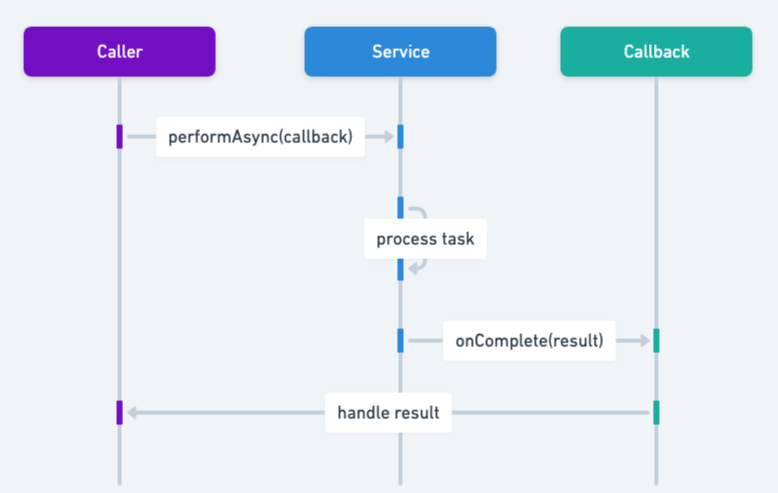
CompletableFuture implements both Future and CompletionStage. The CompletionStage interface defines the contract for an asynchronous computation step that can be combined with other steps. This allows for “pipelining” operations, similar to Java Streams, but for asynchronous events.
Basic Asynchronous Execution
The entry point for most CompletableFuture logic involves the static factory methods runAsync (for tasks that don’t return a value) and supplyAsync (for tasks that do). By default, these methods execute tasks in the global ForkJoinPool.commonPool(), though sophisticated Java DevOps environments often require custom thread pools.
Here is a fundamental example of fetching data asynchronously, a common pattern in Java Web Development:
import java.util.concurrent.CompletableFuture;
import java.util.concurrent.ExecutionException;
import java.util.concurrent.TimeUnit;

public class AsyncBasics {
    public static void main(String[] args) throws ExecutionException, InterruptedException {

        System.out.println("Main thread: " + Thread.currentThread().getName());

        // Start an asynchronous task
        CompletableFuture futureOrder = CompletableFuture.supplyAsync(() -> {
            System.out.println("Worker thread: " + Thread.currentThread().getName());
            try {
                // Simulate a long-running DB operation (e.g., via JDBC or Hibernate)
                TimeUnit.SECONDS.sleep(2);
            } catch (InterruptedException e) {
                throw new IllegalStateException(e);
            }
            return "Order #12345 Details";
        });

        // Non-blocking callback
        futureOrder.thenAccept(order -> {
            System.out.println("Processing: " + order);
        });

        // Keep main thread alive long enough to see result (for demo purposes)
        System.out.println("Main thread continues working...");
        TimeUnit.SECONDS.sleep(3);
    }
}
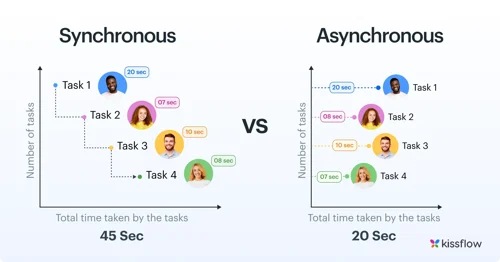
In this example, the main thread is not blocked while the “database” call happens. This non-blocking nature is essential for Java REST API design, ensuring that server threads are released back to the pool to handle other incoming HTTP requests while waiting for I/O.
Chaining and Composing Asynchronous Tasks
Apple AirTag on keychain – Protective Case For Apple Airtag Air Tag Carbon Fiber Silicone …
The true power of CompletableFuture lies in its ability to chain operations. In Java Best Practices, we avoid “callback hell” by using methods like thenApply, thenCompose, and thenCombine. These methods allow you to transform results, chain dependent asynchronous calls, or combine independent results.
Transformation and Composition
Consider a scenario in a Java E-commerce application where you need to:
- Fetch a user profile (Async I/O).
- Based on the user ID, fetch their recent orders (Async I/O, dependent on step 1).
- Calculate a loyalty score (CPU bound).
Using Java Lambda expressions, this flow becomes readable and concise. We use thenCompose when the callback function itself returns a Future (similar to flatMap in Streams), and thenApply for synchronous transformations (similar to map).
import java.util.concurrent.CompletableFuture;

public class OrderService {

    public CompletableFuture getUser(String userId) {
        return CompletableFuture.supplyAsync(() -> {
            // Simulate fetching from User Microservice
            return new User(userId, "john.doe@example.com");
        });
    }

    public CompletableFuture getLoyaltyScore(User user) {
        return CompletableFuture.supplyAsync(() -> {
            // Simulate fetching order history from Database and calculating score
            return user.getId().equals("U1") ? 95.5 : 10.0;
        });
    }

    public void processUserAnalytics(String userId) {
        getUser(userId)
            .thenCompose(user -> getLoyaltyScore(user)) // Chaining dependent futures
            .thenApply(score -> {
                // Synchronous transformation
                if (score > 50) return "Gold Member";
                else return "Standard Member";
            })
            .thenAccept(status -> System.out.println("User Status: " + status));
    }

    // Simple POJO for the example
    static class User {
        private String id;
        private String email;
        public User(String id, String email) { this.id = id; this.email = email; }
        public String getId() { return id; }
    }
}
This pattern is ubiquitous in Spring Boot applications using asynchronous service layers. It ensures that threads are never idle, waiting for responses from other Java Cloud services like AWS Java SDK calls or Azure Java integrations.
Handling Parallelism and Aggregation
Often, a Java Backend needs to query multiple sources simultaneously and aggregate the results. For example, a travel booking site might query three different airline APIs at the same time. Waiting for them sequentially would be terrible for Java Performance.
CompletableFuture.allOf allows you to wait for multiple futures to complete. However, allOf returns a CompletableFuture<Void>, so extracting the return values requires a bit of Clean Code Java finesse.
import java.util.Arrays;
import java.util.List;
import java.util.concurrent.CompletableFuture;
import java.util.stream.Collectors;

public class AggregatorService {

    private CompletableFuture fetchFlight(String provider) {
        return CompletableFuture.supplyAsync(() -> {
            try { Thread.sleep((long) (Math.random() * 1000)); } catch (InterruptedException e) {}
            return "Flight from " + provider + ": $300";
        });
    }

    public void aggregateFlights() {
        CompletableFuture delta = fetchFlight("Delta");
        CompletableFuture united = fetchFlight("United");
        CompletableFuture american = fetchFlight("American");

        List> futures = Arrays.asList(delta, united, american);

        CompletableFuture allFutures = CompletableFuture.allOf(
            futures.toArray(new CompletableFuture[0])
        );

        // When all are done, extract results
        CompletableFuture> allPageContents = allFutures.thenApply(v -> {
            return futures.stream()
                .map(CompletableFuture::join) // join() is safe here because we know they are done
                .collect(Collectors.toList());
        });

        allPageContents.thenAccept(results -> {
            System.out.println("Aggregated Results:");
            results.forEach(System.out::println);
        });
    }
}
This approach is vital for Java Microservices orchestration. It reduces the total response time to the duration of the slowest service call, rather than the sum of all calls.
Exception Handling and Timeouts
In distributed systems, failure is inevitable. Network glitches, database timeouts, or Java Security exceptions (like expired JWT Java tokens) can occur. Standard try-catch blocks do not work effectively with asynchronous code because the exception is thrown on a different thread.
CompletableFuture provides robust mechanisms like exceptionally, handle, and (since Java 9) completeOnTimeout. Proper error handling is a key differentiator between junior code and Java Best Practices.

import java.util.concurrent.CompletableFuture;
import java.util.concurrent.TimeUnit;

public class ResilientService {

    public void fetchDataWithFallback() {
        CompletableFuture.supplyAsync(() -> {
            // Simulate an unstable service
            if (Math.random() > 0.5) {
                throw new RuntimeException("External API Unavailable");
            }
            return "Real Data";
        })
        .orTimeout(1, TimeUnit.SECONDS) // Java 9 feature: Timeout if taking too long
        .exceptionally(ex -> {
            // Handle specific exceptions and provide fallback
            System.err.println("Error occurred: " + ex.getMessage());
            return "Cached Fallback Data";
        })
        .thenAccept(data -> System.out.println("Final Result: " + data));
    }
}
Using orTimeout is crucial for maintaining system stability. Without it, a hung external service could exhaust your thread pool, leading to a cascading failure across your Java Deployment.
Best Practices and Optimization
1. Custom Executors
By default, CompletableFuture uses the ForkJoinPool.commonPool(). The size of this pool is linked to the number of CPU cores. For CPU-intensive tasks (like Java Cryptography or image processing), this is fine. However, for I/O-bound tasks (database calls, Java Mobile network requests), this pool is too small.
Always provide a custom Executor for I/O operations to prevent thread starvation. This is a critical aspect of JVM Tuning.
ExecutorService ioExecutor = Executors.newFixedThreadPool(10);
CompletableFuture.supplyAsync(() -> blockingDbCall(), ioExecutor);
2. CompletableFuture vs. Virtual Threads (Project Loom)
With the release of Java 21, Virtual Threads have become a hot topic. Virtual threads allow you to write blocking code that behaves like non-blocking code under the hood. While Virtual Threads simplify the programming model (making it look synchronous), CompletableFuture remains highly relevant for:
- Reactive streams processing.
- Complex event composition.
- Interoperating with reactive libraries like RxJava or Project Reactor (common in Spring Boot WebFlux).
3. Testing Asynchronous Code
Testing async code can be tricky. Frameworks like JUnit and Mockito are essential. When testing CompletableFuture, ensure you wait for the future to complete before asserting results, or use CompletableFuture.join() within your test methods to block the test runner until the result is ready.
Conclusion
Mastering CompletableFuture is a pivotal step in advancing your career in Java Development. It moves you away from the rigid, blocking models of the past and enables you to build responsive, resilient, and scalable applications suitable for modern Java Cloud environments. Whether you are building Android Development apps that need to keep the UI smooth, or high-throughput Java Microservices, the principles of asynchronous composition are universal.
As you implement these patterns, remember to focus on exception handling and thread pool isolation. While new features in Java 21 like Virtual Threads offer alternatives, the functional composition style of CompletableFuture remains a powerful tool in the Java Architecture toolkit. Start refactoring your legacy blocking code today, and unlock the full potential of your hardware.