
Introduction: Escaping the Synchronous Rut in Modern Java Development
In the world of modern software, especially within a Java Microservices architecture, responsiveness is king. Users expect applications to be fast and fluid, and services need to handle thousands of concurrent requests without breaking a sweat. However, traditional synchronous programming, where each task must complete before the next one begins, creates bottlenecks. Imagine a Java REST API that calls three different downstream services; it’s forced to wait for each one sequentially, accumulating latency and leaving the end-user staring at a loading spinner. This is where asynchronous programming becomes not just a feature, but a necessity for building scalable, high-performance Java Backend systems.
For years, Java Concurrency was synonymous with the complexities of manual Thread management, locks, and synchronization—a landscape fraught with potential deadlocks and race conditions. Fortunately, the Java Programming landscape has evolved dramatically. Starting with Java 8 and refined in subsequent releases like Java 17 and Java 21, the platform introduced powerful, high-level abstractions for handling asynchronous operations. This article provides a comprehensive deep dive into modern Java async programming, focusing on the cornerstone CompletableFuture API and its integration with leading frameworks like Spring Boot and Jakarta EE. We’ll explore how to write clean, non-blocking code that unlocks the full potential of your hardware and delivers the performance modern applications demand.
Section 1: The Evolution from Threads to CompletableFuture
Understanding asynchronous Java requires a brief look at its evolution. The journey from low-level thread manipulation to elegant, functional-style composition is key to appreciating the tools we have today.
The Old World: Raw Threads and Basic Futures
The original model for concurrency in Java was the Thread class and the Runnable interface. While powerful, this approach is verbose and error-prone. Developers are responsible for manually creating, starting, and managing the lifecycle of threads. Furthermore, getting a result back from a task running in a separate thread was cumbersome.
Java 5 introduced the ExecutorService and Future<T>, a significant step forward. An ExecutorService manages a pool of threads, abstracting away the manual lifecycle management. Submitting a task returns a Future<T>, which acts as a placeholder for a result that will be available later. However, Future<T> had a major limitation: its get() method is blocking. To retrieve the result, your main thread had to stop and wait, defeating much of the purpose of running the task asynchronously in the first place.
The Modern Solution: CompletableFuture
Java 8 revolutionized Java Async development with the introduction of CompletableFuture. It extends the Future interface but adds a vast array of capabilities for composing, combining, and handling asynchronous operations in a non-blocking, functional style. It represents a computation that might not have finished yet, but it provides a way to attach callbacks that will be executed automatically upon its completion.
With CompletableFuture, you can chain operations together, much like you would with a Java Stream. You can transform a result, consume it, or trigger another asynchronous task, all without ever blocking the calling thread. This declarative approach makes complex concurrent workflows manageable and readable.
Let’s look at a basic example. Instead of submitting a task and blocking to wait for the result, we can tell the CompletableFuture what to do once the result is ready.
import java.util.concurrent.CompletableFuture;
import java.util.concurrent.TimeUnit;

public class BasicCompletableFuture {

    public static void main(String[] args) throws InterruptedException {
        System.out.println("Main thread: " + Thread.currentThread().getName());

        // Run a task asynchronously using the common ForkJoinPool
        CompletableFuture<String> future = CompletableFuture.supplyAsync(() -> {
            System.out.println("Async task running in thread: " + Thread.currentThread().getName());
            try {
                // Simulate a long-running I/O operation
                TimeUnit.SECONDS.sleep(2);
            } catch (InterruptedException e) {
                throw new IllegalStateException(e);
            }
            return "Hello from the Future!";
        });

        // Attach a non-blocking callback to be executed when the future completes
        future.thenAccept(result -> {
            System.out.println("Callback running in thread: " + Thread.currentThread().getName());
            System.out.println(result);
        });

        System.out.println("Main thread continues to run without blocking...");

        // Keep the main thread alive to see the async result
        TimeUnit.SECONDS.sleep(3);
    }
}
In this snippet, the main thread kicks off the async task with supplyAsync and immediately continues its work. The lambda passed to thenAccept is a callback that only executes after the 2-second delay, demonstrating the non-blocking nature of the API.
Section 2: Practical Implementation and Composition
The true power of CompletableFuture lies in its rich set of composition methods. These allow you to build sophisticated data processing pipelines that execute concurrently, significantly improving the throughput and efficiency of your Java Web Development projects.
Chaining Asynchronous Operations
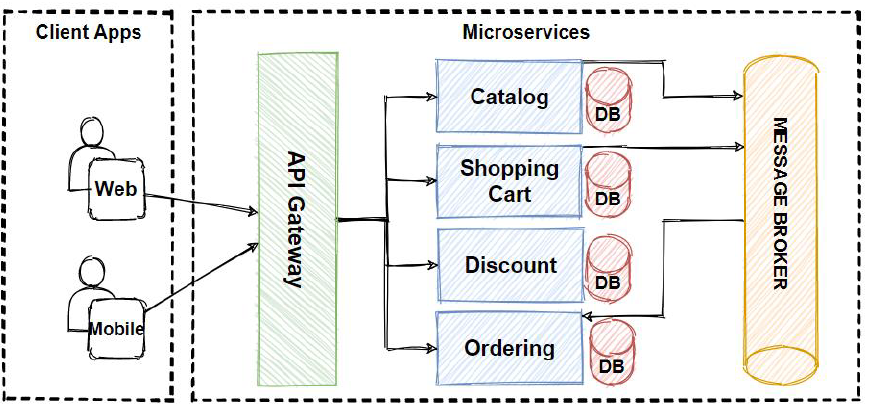
A common scenario in a microservices environment is orchestrating calls to multiple services. For example, to display a user’s profile page, you might need to fetch their basic details from a user service and their recent orders from an order service. With CompletableFuture, you can perform these operations in parallel and combine their results.
The primary methods for chaining are:
thenApply(Function): Transforms the result of aCompletableFuture. It takes a function that is applied to the result when it becomes available. This operation is synchronous with respect to the completion of the previous stage.thenAccept(Consumer): Accepts the result of aCompletableFuturebut doesn’t return anything (void). Useful for final actions, like logging or saving to a database.thenCompose(Function): Similar tothenApply, but the provided function must return anotherCompletableFuture. This is used to sequence two dependent asynchronous computations, flattening the result (avoidingCompletableFuture<CompletableFuture<T>>).thenCombine(CompletionStage, BiFunction): Combines the results of two independentCompletableFutures when both are complete.
Handling Exceptions Gracefully
Network calls fail, and services can become unavailable. A robust asynchronous pipeline must handle exceptions. CompletableFuture provides elegant methods for this:
exceptionally(Function): Provides a fallback value if the asynchronous computation completes with an exception. It’s similar to acatchblock.handle(BiFunction): A more general method that is executed regardless of whether the future completed normally or with an exception. It receives both the result (which may be null) and the exception (which may be null).
Let’s combine these concepts in a more practical example that simulates fetching and combining user data.
import java.util.concurrent.CompletableFuture;
import java.util.concurrent.ExecutorService;
import java.util.concurrent.Executors;
import java.util.concurrent.TimeUnit;

// Simple DTOs for demonstration
record User(String id, String name) {}
record UserProfile(String userId, String name, String recentOrder) {}

public class AdvancedCompletableFuture {

    // Simulate a remote service call
    private static User fetchUserDetails(String userId) {
        System.out.println("Fetching user details for " + userId + " on " + Thread.currentThread().getName());
        try {
            TimeUnit.SECONDS.sleep(1); // Simulate network latency
        } catch (InterruptedException e) { /* ignored */ }
        return new User(userId, "John Doe");
    }

    // Simulate another remote service call
    private static String fetchUserRecentOrder(String userId) {
        System.out.println("Fetching orders for " + userId + " on " + Thread.currentThread().getName());
        try {
            TimeUnit.SECONDS.sleep(2); // Simulate network latency
        } catch (InterruptedException e) { /* ignored */ }
        // Simulate a failure for a specific user
        if ("user-123-fail".equals(userId)) {
            throw new RuntimeException("Order service is down!");
        }
        return "Order #98765";
    }

    public static void main(String[] args) {
        ExecutorService customExecutor = Executors.newFixedThreadPool(4);
        String userId = "user-123";

        System.out.println("Starting async data fetch for user: " + userId);

        CompletableFuture<User> userFuture = CompletableFuture.supplyAsync(
            () -> fetchUserDetails(userId), customExecutor
        );

        CompletableFuture<String> orderFuture = CompletableFuture.supplyAsync(
            () -> fetchUserRecentOrder(userId), customExecutor
        ).exceptionally(ex -> {
            System.err.println("Failed to fetch orders: " + ex.getMessage());
            return "No recent orders found (service error)"; // Fallback value
        });

        CompletableFuture<UserProfile> userProfileFuture = userFuture.thenCombine(
            orderFuture,
            (user, order) -> new UserProfile(user.id(), user.name(), order)
        );

        userProfileFuture.thenAccept(profile -> {
            System.out.println("Successfully created user profile: " + profile);
        }).join(); // Block for demonstration purposes; avoid in real applications

        customExecutor.shutdown();
    }
}
In this example, fetchUserDetails and fetchUserRecentOrder are executed in parallel on a custom thread pool. The exceptionally block ensures that even if the order service fails, the pipeline can continue and construct a partial profile. The thenCombine method elegantly merges the results from both independent futures into a final UserProfile object.
Section 3: Advanced Techniques and Framework Integration
While CompletableFuture provides the core API, real-world Java Enterprise applications often rely on frameworks like Spring Boot and Jakarta EE to manage concurrency. These frameworks simplify thread pool management, context propagation, and configuration.
Managing Multiple Futures with allOf and anyOf
Sometimes you need to wait for a collection of asynchronous tasks to complete.
CompletableFuture.allOf(futures...): Returns a newCompletableFuturethat completes when all of the given futures complete. This is useful for “fork-join” style operations where you fire off many tasks and need to wait for all of them before proceeding.CompletableFuture.anyOf(futures...): Completes as soon as any one of the given futures completes. This is useful for scenarios like querying multiple redundant services and taking the first response.
Asynchronous Methods in Spring Boot with @Async
The Java Spring framework, particularly Spring Boot, provides a simple yet powerful way to make methods asynchronous using the @Async annotation. This declarative approach hides the boilerplate of `ExecutorService` and CompletableFuture management.
First, you must enable async support in your main application class:
import org.springframework.boot.SpringApplication;
import org.springframework.boot.autoconfigure.SpringBootApplication;
import org.springframework.scheduling.annotation.EnableAsync;

@SpringBootApplication
@EnableAsync // Enable Spring's asynchronous method execution capability
public class AsyncApplication {
    public static void main(String[] args) {
        SpringApplication.run(AsyncApplication.class, args);
    }
}
Next, you can annotate any public method in a Spring bean with @Async. Spring will execute it in a background thread pool. For the method to return a result, its return type must be Future<T> or, preferably, CompletableFuture<T>.
import org.springframework.scheduling.annotation.Async;
import org.springframework.stereotype.Service;
import java.util.concurrent.CompletableFuture;
import java.util.concurrent.TimeUnit;

@Service
public class NotificationService {

    @Async // This method will be executed asynchronously
    public CompletableFuture<String> sendEmail(String recipient) {
        System.out.println("Sending email to " + recipient + " on thread: " + Thread.currentThread().getName());
        try {
            // Simulate a slow email sending operation
            TimeUnit.SECONDS.sleep(3);
        } catch (InterruptedException e) {
            return CompletableFuture.failedFuture(e);
        }
        System.out.println("Email sent successfully to " + recipient);
        return CompletableFuture.completedFuture("Email sent to " + recipient);
    }
}
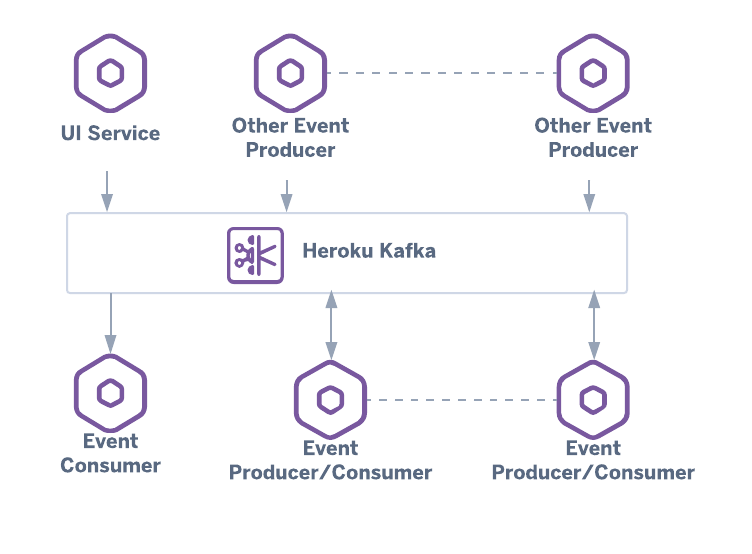
When another service calls notificationService.sendEmail(...), the call returns immediately with a CompletableFuture, and the actual email-sending logic runs in a separate thread managed by Spring.
Managed Concurrency in Jakarta EE
In the Jakarta EE (formerly Java EE) world, the Concurrency Utilities for Java EE specification provides a standardized, container-managed approach. Instead of creating your own thread pools, you use a ManagedExecutorService provided by the application server (e.g., WildFly, Open Liberty). This is crucial for Java Enterprise applications because the container ensures that security context, transaction context, and other important metadata are propagated to the asynchronous threads, preventing subtle and hard-to-debug issues. This is a key aspect of ensuring ThreadSafety in a managed environment.
import jakarta.annotation.Resource;
import jakarta.enterprise.concurrent.ManagedExecutorService;
import jakarta.ws.rs.GET;
import jakarta.ws.rs.Path;
import jakarta.ws.rs.container.AsyncResponse;
import jakarta.ws.rs.container.Suspended;

@Path("/reports")
public class ReportResource {

    // Inject the container-managed executor service
    @Resource
    private ManagedExecutorService managedExecutor;

    @GET
    @Path("/generate")
    public void generateReport(@Suspended final AsyncResponse asyncResponse) {
        managedExecutor.submit(() -> {
            try {
                // Simulate a long-running report generation process
                Thread.sleep(5000);
                String report = "This is the generated report content.";
                asyncResponse.resume(report);
            } catch (InterruptedException e) {
                asyncResponse.resume(e);
            }
        });
    }
}
Here, a JAX-RS endpoint uses @Suspended AsyncResponse to free up the request thread while the long-running task is submitted to the ManagedExecutorService. The container manages the thread pool and ensures the execution context is preserved.
Section 4: Best Practices and Performance Optimization
Writing effective asynchronous code goes beyond just using the right APIs. It requires a shift in mindset and an awareness of potential pitfalls.
1. Choose the Right Executor
By default, CompletableFuture tasks without a specified executor run on the common ForkJoinPool.commonPool(). This pool is shared across the entire JVM and is designed for CPU-bound tasks. If you are running long-running, I/O-bound tasks (like network calls or database queries), you can starve the common pool. It’s a best practice to create and provide a dedicated ExecutorService for I/O-bound operations to isolate them and size the thread pool appropriately (often larger than the number of CPU cores).
2. Avoid Blocking at All Costs
The primary goal of async programming is to avoid blocking. Calling .join() or .get() on a CompletableFuture defeats the purpose, as it blocks the current thread until the result is available. In a reactive or fully asynchronous system, you should chain operations using methods like thenApply and thenAccept all the way to the end of the request-response cycle.
3. Centralize Exception Handling
Define a clear strategy for handling exceptions in your asynchronous pipelines. Use exceptionally() for providing fallback values and continuing the flow, and use handle() when you need to perform an action regardless of the outcome. Unhandled exceptions in a future can be silently swallowed, so it’s critical to terminate every chain with some form of error handling.
4. Understand Context Propagation
In enterprise applications, thread-local variables are often used to store security contexts, transaction IDs, or tracing information. When you switch threads in an async operation, this context is lost by default. Frameworks like Jakarta EE‘s ManagedExecutorService handle this automatically. In other environments like Spring, you may need to use tools like Micrometer’s context propagation libraries or manually pass context to your async tasks.
5. Monitor and Tune Your Thread Pools
For high-performance systems, monitoring the state of your thread pools is essential for Java Performance and JVM Tuning. Keep an eye on queue sizes, active thread counts, and task execution times. If queues are constantly full, your pool is too small. If you have many idle threads, it might be too large. Proper sizing is key to optimal resource utilization.
Conclusion: Embracing the Asynchronous Future of Java
Asynchronous programming is a fundamental paradigm for building modern, scalable, and resilient Java applications. We’ve journeyed from the manual and error-prone world of raw Java Threads to the elegant and powerful composition model offered by CompletableFuture. By leveraging its functional chaining capabilities, you can write clean, non-blocking code that orchestrates complex concurrent workflows with ease.
Furthermore, frameworks like Spring Boot and Jakarta EE provide an even higher level of abstraction, managing thread pools and execution context to simplify Java Enterprise development. By adopting @Async in Spring or ManagedExecutorService in Jakarta EE, developers can focus on business logic rather than concurrency plumbing.
The key takeaway is to stop thinking sequentially and start building reactive data pipelines. Embrace the non-blocking mindset, choose the right tools for your environment, and handle failures gracefully. By mastering these Java Async techniques, you’ll be well-equipped to build the next generation of high-performance, cloud-native Java services.