
Introduction to the Functional Revolution in Java
The landscape of Java Development underwent a seismic shift with the release of Java 8, introducing Lambda expressions and the Stream API. Before this pivotal update, Java was strictly an object-oriented language, often criticized for its verbosity and boilerplate code. The introduction of Java Lambda expressions brought functional programming paradigms into the ecosystem, allowing developers to write more concise, readable, and maintainable code. Today, whether you are working on Java 17, the latest Java 21, or maintaining legacy systems, understanding Lambdas is non-negotiable.
However, the term “Lambda” in the Java ecosystem has a dual meaning. It refers to the language feature that enables functional programming, but it is also synonymous with AWS Java development via AWS Lambda, the serverless compute service. As Java Microservices and Cloud Native architectures evolve, the intersection of concise Java syntax and serverless deployment models—facilitated by frameworks like Spring Boot and Quarkus—has become a cornerstone of modern Java Architecture.
In this comprehensive guide, we will explore the depths of Java Lambda expressions, integrating them with the Stream API, and extending that knowledge to serverless applications. We will cover Java Best Practices, performance optimization, and how these concepts fit into the broader world of Java Enterprise and Jakarta EE development.
Section 1: Core Concepts of Java Lambda Expressions
At its heart, a Lambda expression is a short block of code which takes in parameters and returns a value. It is essentially an anonymous function—a method without a name, but with a list of parameters, a body, a return type, and possibly a list of exceptions that can be thrown. This feature relies heavily on the concept of Functional Interfaces.
Functional Interfaces and Syntax
A functional interface is an interface that contains exactly one abstract method. It may contain default methods or static methods, but only one abstract method is allowed. The @FunctionalInterface annotation is used to ensure this rule is enforced by the compiler. Common examples in the JDK include Runnable, Callable, Comparator, and the interfaces found in the java.util.function package.
The syntax of a Lambda expression consists of three parts:
- Parameter List: Enclosed in parentheses.
- Arrow Token:
-> - Body: Expressions or a block of code.
Let’s look at how Lambdas simplify Java Basics by replacing anonymous inner classes. This is crucial for writing Clean Code Java.
package com.java.tutorial.lambda;

import java.util.Comparator;
import java.util.ArrayList;
import java.util.Collections;
import java.util.List;

public class LambdaBasics {

    public static void main(String[] args) {
        List frameworks = new ArrayList<>();
        frameworks.add("Spring Boot");
        frameworks.add("Quarkus");
        frameworks.add("Micronaut");
        frameworks.add("Hibernate");

        // OLD WAY: Java 7 and below using Anonymous Inner Class
        Collections.sort(frameworks, new Comparator() {
            @Override
            public int compare(String s1, String s2) {
                return s1.length() - s2.length();
            }
        });

        // NEW WAY: Java Lambda Expression
        // Syntax: (parameters) -> expression
        Collections.sort(frameworks, (s1, s2) -> s1.length() - s2.length());

        // EVEN BETTER: Using Method References
        frameworks.forEach(System.out::println);
    }
}
The java.util.function Package
To fully leverage Java Generics and Lambdas, you must understand the four core functional interface categories provided by Java:
Executive leaving office building – Exclusive | China Blocks Executive at U.S. Firm Kroll From Leaving …
- Predicate<T>: Takes an argument and returns a boolean. Used for filtering.
- Function<T, R>: Takes an argument of type T and returns a result of type R. Used for mapping.
- Consumer<T>: Takes an argument and returns nothing (void). Used for printing or saving to a Java Database.
- Supplier<T>: Takes no arguments and returns a result. Used for lazy initialization.
Section 2: Implementation Details – Streams and Data Processing
The real power of Lambdas is unlocked when combined with the Stream API. This allows developers to process collections of objects in a declarative way. This is particularly useful in Java Web Development and Java Backend tasks where data transformation is frequent, such as converting entities to DTOs in a Java REST API.
Stream Operations
Streams support SQL-like operations. You can filter, map, reduce, find, match, and sort. Unlike Java Collections, streams do not store data; they convey elements from a source through a pipeline of computational operations.
Let’s simulate a scenario involving Java Security and user management. We will filter users based on their roles, transform the data, and collect it. This demonstrates how to handle complex logic without nested loops, a key aspect of Java Optimization.
package com.java.tutorial.streams;

import java.util.Arrays;
import java.util.List;
import java.util.stream.Collectors;

// A simple POJO representing a User in a system
class User {
    private String username;
    private String role; // e.g., ADMIN, USER, GUEST
    private boolean isActive;

    public User(String username, String role, boolean isActive) {
        this.username = username;
        this.role = role;
        this.isActive = isActive;
    }

    public String getUsername() { return username; }
    public String getRole() { return role; }
    public boolean isActive() { return isActive; }
}

public class StreamProcessing {

    public static void main(String[] args) {
        List users = Arrays.asList(
            new User("alice_dev", "ADMIN", true),
            new User("bob_ops", "USER", true),
            new User("charlie_sec", "USER", false),
            new User("david_manager", "ADMIN", true)
        );

        // Scenario: Get a list of active Admin usernames for JWT Java token generation
        List activeAdmins = users.stream()
            // 1. Filter: Keep only active users
            .filter(user -> user.isActive())
            // 2. Filter: Keep only ADMIN role
            .filter(user -> "ADMIN".equals(user.getRole()))
            // 3. Map: Transform User object to String (username)
            .map(User::getUsername)
            // 4. Collect: Gather results into a List
            .collect(Collectors.toList());

        System.out.println("Active Admins: " + activeAdmins);
    }
}
Parallel Streams and Concurrency
Java Concurrency is notoriously difficult. However, Streams allow you to switch to parallel processing simply by changing stream() to parallelStream(). This utilizes the Fork/Join framework under the hood. While this can improve Java Performance on multi-core machines, it requires caution. Operations must be stateless and non-interfering to avoid race conditions. This is vital when dealing with high-throughput systems like those found in Android Development backends or Google Cloud Java services.
Section 3: Advanced Techniques – Serverless Java on AWS
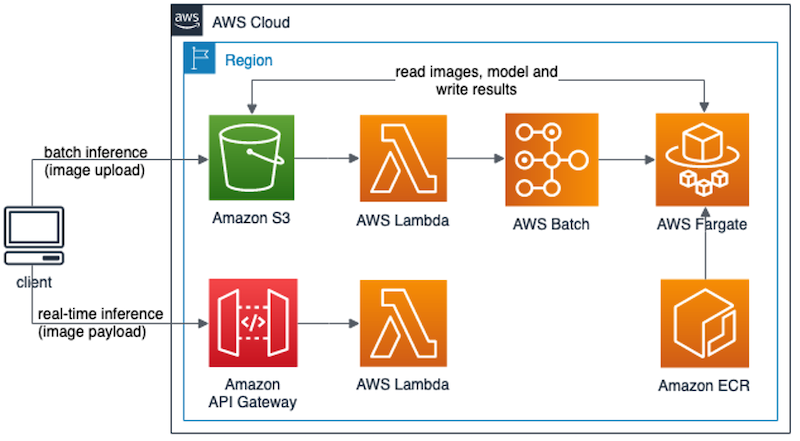
Moving beyond the language syntax, “Java Lambda” often refers to running Java on AWS Lambda. Historically, Java Deployment on serverless platforms suffered from “cold start” issues due to the JVM startup time. However, with the advent of Quarkus, Micronaut, and Spring Boot 3 with AOT (Ahead-of-Time) compilation, Java has become a first-class citizen in the serverless world.
Integrating Functional Logic with Serverless Handlers
When building a Quarkus application for AWS Lambda, you often implement a specific interface. The logic inside this handler often utilizes the functional patterns we discussed earlier. This bridges the gap between Java Frameworks and Cloud Computing.
Below is an example of a modern Java Lambda function using the AWS SDK structure, which could be deployed via Docker Java containers or native zips. This example simulates processing an order in a Java E-commerce context.
package com.serverless.aws;

import com.amazonaws.services.lambda.runtime.Context;
import com.amazonaws.services.lambda.runtime.RequestHandler;
import java.util.Map;

// Request DTO
class OrderRequest {
    private String orderId;
    private double amount;

    // Getters and Setters omitted for brevity
    public String getOrderId() { return orderId; }
    public double getAmount() { return amount; }
}

// Response DTO
class OrderResponse {
    private String message;
    private String status;

    public OrderResponse(String message, String status) {
        this.message = message;
        this.status = status;
    }
    // Getters omitted
}

/**
 * AWS Lambda Handler implementing RequestHandler interface.
 * This demonstrates the intersection of Functional Java and Cloud Infrastructure.
 */
public class OrderProcessingHandler implements RequestHandler {

    @Override
    public OrderResponse handleRequest(OrderRequest input, Context context) {
        // Logging via Context (Standard in AWS Java)
        context.getLogger().log("Processing order: " + input.getOrderId());

        // Functional validation logic using a simple Predicate
        if (isValidOrder(input)) {
            return processPayment(input);
        } else {
            return new OrderResponse("Invalid Order Amount", "FAILED");
        }
    }

    // Helper method mimicking business logic
    private boolean isValidOrder(OrderRequest request) {
        // Lambda-style logic: amount must be positive
        return request.getAmount() > 0;
    }

    private OrderResponse processPayment(OrderRequest request) {
        // In a real app, this might call a Payment Gateway or update a Java Database via JPA
        return new OrderResponse("Order " + request.getOrderId() + " processed successfully.", "SUCCESS");
    }
}
In a CI/CD Java pipeline, this code would be built using Java Maven or Java Gradle, tested with JUnit and Mockito, and deployed to AWS. Tools like Quarkus allow compiling this to a native binary using GraalVM, reducing the memory footprint and startup time significantly, making it ideal for Java Scalability.

Executive leaving office building – After a Prolonged Closure, the Studio Museum in Harlem Moves Into …
Section 4: Best Practices and Optimization
Adopting Lambdas and Streams requires a shift in mindset to ensure Java Design Patterns are applied correctly. Here are critical best practices for professional Java Development.
1. Handling Checked Exceptions
One of the biggest pain points in Java Lambdas is that standard functional interfaces do not throw checked exceptions. If you are performing file I/O or JDBC operations inside a Lambda, you must handle the exception inside the block. A common pattern is to write a wrapper method.
// Best Practice: Exception Wrapping
import java.util.function.Consumer;

public class LambdaUtils {

    // Custom functional interface that allows exceptions
    @FunctionalInterface
    public interface ThrowingConsumer {
        void accept(T t) throws E;
    }

    // Wrapper method to convert checked exception to unchecked RuntimeException
    public static  Consumer wrapper(ThrowingConsumer throwingConsumer) {
        return i -> {
            try {
                throwingConsumer.accept(i);
            } catch (Exception ex) {
                throw new RuntimeException(ex);
            }
        };
    }
}
2. Avoid Complex Logic in Lambdas
Lambdas should be one-liners or very short blocks. If your Lambda expression spans multiple lines, it likely violates Clean Code Java principles. Extract that logic into a private method and use a Method Reference (e.g., this::complexLogic) instead. This improves readability and testability.
3. Stream Performance vs. Loops
Executive leaving office building – Exclusive | Bank of New York Mellon Approached Northern Trust to …
While Streams are readable, they are not always faster than traditional for loops, especially for small collections. The overhead of setting up the stream pipeline can outweigh the benefits. Always benchmark using tools like JMH (Java Microbenchmark Harness) before optimizing. However, for complex filtering and mapping of large datasets, Streams are generally preferred for their maintainability.
4. Effectively Final Variables
Variables used inside a Lambda expression must be final or “effectively final” (never modified after initialization). This is a constraint of the Java memory model regarding closures. If you need to mutate state, consider using atomic classes (like AtomicInteger) or refactoring your design to be purely functional.
Conclusion
Java Lambda expressions have fundamentally transformed the language, bridging the gap between object-oriented rigidity and functional flexibility. From simplifying Java Collections manipulation to enabling reactive programming patterns in Spring Boot and powering serverless functions on AWS Java, Lambdas are ubiquitous in modern development.
As you advance in your career—whether you are building Android Java apps, designing Java Microservices, or orchestrating containers with Kubernetes Java—mastering these concepts is essential. The evolution continues with Java 21, introducing features like Virtual Threads (Project Loom) and Pattern Matching, which work harmoniously with the functional foundations laid by Lambdas.
To stay competitive, continue exploring frameworks like Quarkus that optimize Java for the cloud, practice writing clean functional code, and integrate robust Java Testing strategies into your workflow. The future of Java is concise, fast, and functional.