
Introduction: The Evolution of Enterprise Java
For over two decades, Java has remained the undisputed king of enterprise software development. From the early days of J2EE to the robust stability of Java EE 8, the platform has powered the banking systems, e-commerce giants, and insurance backends that run the global economy. However, the landscape of Java Enterprise is undergoing a seismic shift. The transition from the Oracle-led Java EE to the community-driven Jakarta EE under the Eclipse Foundation marks a new era for Java Development.
Many organizations today find themselves at a crossroads. Their mission-critical applications are running on Java EE 8, a stable but aging standard. While these legacy systems are robust, the shrinking vendor support and the demand for cloud-native agility are driving a need for modernization. It is no longer just about maintaining code; it is about evolving architectures to embrace Java Microservices, containerization, and the latest features of Java 17 and Java 21.
This comprehensive guide explores the state of modern Enterprise Java. We will delve into the technical migration from the javax namespace to jakarta, explore how Spring Boot fits into the modern enterprise ecosystem, and demonstrate practical implementations using Hibernate, JPA, and modern Java Streams. Whether you are maintaining a legacy monolith or building a Java Cloud native application on AWS Java or Azure Java, understanding these core concepts is essential for future-proofing your career and your codebase.
Section 1: Core Concepts and the Namespace Migration
The most significant change in the recent history of Java Web Development is the “Big Bang” migration. When Java EE was transferred to the Eclipse Foundation to become Jakarta EE, legal constraints required a change in the package namespace. Starting with Jakarta EE 9, all enterprise specifications moved from javax.* to jakarta.*. This affects everything from Java Servlets to JPA (Java Persistence API) and CDI (Contexts and Dependency Injection).
Understanding Jakarta Persistence (JPA)
JPA remains the standard for object-relational mapping in the enterprise. In a modern Jakarta EE 10 or Spring Boot 3 application, you must use the new namespace. Below is an example of a modern Entity class. Note the use of Java Best Practices such as encapsulation and the use of the jakarta.persistence package.
package com.enterprise.modernization.model;

import jakarta.persistence.*;
import java.io.Serializable;
import java.time.LocalDateTime;
import java.util.Objects;

/**
 * Represents a Customer entity in a modern Jakarta EE application.
 * Utilizes JPA annotations for ORM mapping.
 */
@Entity
@Table(name = "customers")
@NamedQuery(
    name = "Customer.findByStatus",
    query = "SELECT c FROM Customer c WHERE c.status = :status"
)
public class Customer implements Serializable {

    @Id
    @GeneratedValue(strategy = GenerationType.IDENTITY)
    private Long id;

    @Column(nullable = false, length = 100)
    private String email;

    @Column(name = "created_at")
    private LocalDateTime createdAt;

    @Enumerated(EnumType.STRING)
    private CustomerStatus status;

    // Default constructor required by JPA
    public Customer() {}

    public Customer(String email, CustomerStatus status) {
        this.email = email;
        this.status = status;
        this.createdAt = LocalDateTime.now();
    }

    // Getters and Setters
    public Long getId() { return id; }
    public String getEmail() { return email; }
    public void setEmail(String email) { this.email = email; }

    // Lifecycle hooks are powerful features in Enterprise Java
    @PrePersist
    protected void onCreate() {
        if (this.createdAt == null) {
            this.createdAt = LocalDateTime.now();
        }
    }

    @Override
    public boolean equals(Object o) {
        if (this == o) return true;
        if (!(o instanceof Customer)) return false;
        Customer customer = (Customer) o;
        return Objects.equals(getId(), customer.getId());
    }

    @Override
    public int hashCode() {
        return Objects.hash(getId());
    }
}

enum CustomerStatus {
    ACTIVE, INACTIVE, SUSPENDED
}
Dependency Injection with CDI
In the world of Java Architecture, Inversion of Control (IoC) is paramount. While Spring Framework uses its own container, the Jakarta EE standard utilizes CDI. Modernizing your application often involves refactoring EJB (Enterprise JavaBeans) into lighter-weight CDI beans. This promotes Clean Code Java principles and makes unit testing with tools like JUnit and Mockito significantly easier.
package com.enterprise.modernization.service;

import com.enterprise.modernization.model.Customer;
import jakarta.enterprise.context.ApplicationScoped;
import jakarta.inject.Inject;
import jakarta.persistence.EntityManager;
import jakarta.persistence.PersistenceContext;
import jakarta.transaction.Transactional;
import java.util.List;
import java.util.logging.Logger;

/**
 * Service layer handling business logic.
 * Uses CDI (@ApplicationScoped) and JTA (@Transactional).
 */
@ApplicationScoped
public class CustomerService {

    private static final Logger LOGGER = Logger.getLogger(CustomerService.class.getName());

    @PersistenceContext(unitName = "EnterprisePU")
    private EntityManager em;

    // Constructor Injection is preferred over Field Injection for testability
    @Inject
    public CustomerService() {
    }

    @Transactional
    public Customer registerCustomer(String email) {
        LOGGER.info("Registering new customer: " + email);
        Customer newCustomer = new Customer(email, CustomerStatus.ACTIVE);
        em.persist(newCustomer);
        return newCustomer;
    }

    public List getActiveCustomers() {
        return em.createNamedQuery("Customer.findByStatus", Customer.class)
                .setParameter("status", CustomerStatus.ACTIVE)
                .getResultList();
    }
}
Section 2: Implementation Details – Building Modern REST APIs
The backbone of modern Java Backend development is the REST API. Whether you are building a monolithic application or a distributed system using Java Microservices, exposing your business logic via HTTP is standard. In the Jakarta EE world, this is handled by Jakarta REST (formerly JAX-RS). However, in the broader ecosystem, Spring Boot has become the de-facto standard for rapid development.

Apple TV 4K with remote – New Design Amlogic S905Y4 XS97 ULTRA STICK Remote Control Upgrade …
Jakarta REST (JAX-RS) Implementation
JAX-RS provides a portable way to define REST endpoints. It relies heavily on annotations to map HTTP verbs to Java methods. This approach is highly favored in environments using application servers like WildFly, Open Liberty, or Payara.
package com.enterprise.modernization.api;

import com.enterprise.modernization.model.Customer;
import com.enterprise.modernization.service.CustomerService;
import jakarta.inject.Inject;
import jakarta.ws.rs.*;
import jakarta.ws.rs.core.MediaType;
import jakarta.ws.rs.core.Response;
import java.util.List;

@Path("/customers")
@Produces(MediaType.APPLICATION_JSON)
@Consumes(MediaType.APPLICATION_JSON)
public class CustomerResource {

    @Inject
    private CustomerService customerService;

    @GET
    public Response getAllActive() {
        List customers = customerService.getActiveCustomers();
        return Response.ok(customers).build();
    }

    @POST
    public Response createCustomer(CustomerDTO customerDto) {
        // Simple validation logic
        if (customerDto.getEmail() == null || customerDto.getEmail().isEmpty()) {
            return Response.status(Response.Status.BAD_REQUEST)
                           .entity("Email is required").build();
        }

        try {
            Customer created = customerService.registerCustomer(customerDto.getEmail());
            return Response.status(Response.Status.CREATED).entity(created).build();
        } catch (Exception e) {
            return Response.serverError().entity("Error processing request").build();
        }
    }
}
The Spring Boot Alternative
While Jakarta EE provides the specifications, Spring Boot provides an opinionated, “batteries-included” approach. Spring wraps many Jakarta EE specifications (like Servlet and JPA) but offers its own MVC framework. For teams looking at Legacy App Modernization, moving to Spring Boot often provides access to a vast ecosystem of Java Build Tools (like Java Maven and Java Gradle plugins) and cloud integrations.
A Spring Boot controller equivalent simplifies configuration, often removing the need for an external application server, as it embeds Tomcat or Jetty directly into the JAR file. This is crucial for Docker Java deployments and Kubernetes Java orchestration.
Section 3: Advanced Techniques – Streams, Records, and Concurrency
Modernizing Java Enterprise applications isn’t just about changing libraries; it is about adopting modern language features introduced in Java 17 and Java 21. Features like Records, Pattern Matching, and the Stream API allow for more concise, readable, and performant code. Furthermore, handling high-throughput traffic requires a solid understanding of Java Concurrency and Java Async processing.
Leveraging Java Records and Streams
Data Transfer Objects (DTOs) are a staple in enterprise architecture. Prior to Java 14/16, these required verbose classes. Now, we can use Java Records. Combined with Java Streams and Functional Java concepts, data transformation becomes elegant.
The following example demonstrates a service method that fetches entities, filters them based on complex business logic, and maps them to a Record DTO using a Stream pipeline.
package com.enterprise.modernization.logic;

import java.math.BigDecimal;
import java.util.List;
import java.util.Optional;
import java.util.concurrent.CompletableFuture;
import java.util.stream.Collectors;

// Java Record - Immutable data carrier (Java 16+)
public record OrderSummary(String orderId, BigDecimal total, String status) {}

public class OrderProcessor {

    // Simulating a database fetch
    private List fetchOrdersFromDatabase() {
        // In a real app, this calls a Repository/DAO
        return List.of(
            new Order("ORD-001", new BigDecimal("150.00"), "SHIPPED"),
            new Order("ORD-002", new BigDecimal("45.00"), "PENDING"),
            new Order("ORD-003", new BigDecimal("200.00"), "CANCELLED")
        );
    }

    /**
     * Processes orders using Java Streams.
     * Filters for high-value shipped orders and maps to a DTO.
     */
    public List getHighValueShippedOrders() {
        return fetchOrdersFromDatabase().stream()
            // Filter: Keep only SHIPPED orders
            .filter(order -> "SHIPPED".equals(order.getStatus()))
            // Filter: Keep orders over $100
            .filter(order -> order.getAmount().compareTo(new BigDecimal("100.00")) > 0)
            // Map: Transform Entity to Record
            .map(order -> new OrderSummary(
                order.getId(),
                order.getAmount(),
                order.getStatus()
            ))
            // Collect: Gather results into a list
            .collect(Collectors.toList());
    }

    /**
     * Advanced: Asynchronous processing using CompletableFuture.
     * Useful for non-blocking I/O operations in Microservices.
     */
    public CompletableFuture processOrderAsync(String orderId) {
        return CompletableFuture.supplyAsync(() -> {
            // Simulate long-running task (e.g., calling external Payment Gateway)
            try {
                Thread.sleep(1000);
            } catch (InterruptedException e) {
                Thread.currentThread().interrupt();
            }
            return "Processed " + orderId;
        })
        .thenApply(result -> result + " - Email Sent")
        .exceptionally(ex -> "Failed: " + ex.getMessage());
    }
}

// Simple POJO for the example
class Order {
    private String id;
    private BigDecimal amount;
    private String status;

    public Order(String id, BigDecimal amount, String status) {
        this.id = id;
        this.amount = amount;
        this.status = status;
    }
    // Getters...
    public String getId() { return id; }
    public BigDecimal getAmount() { return amount; }
    public String getStatus() { return status; }
}
Concurrency and Virtual Threads
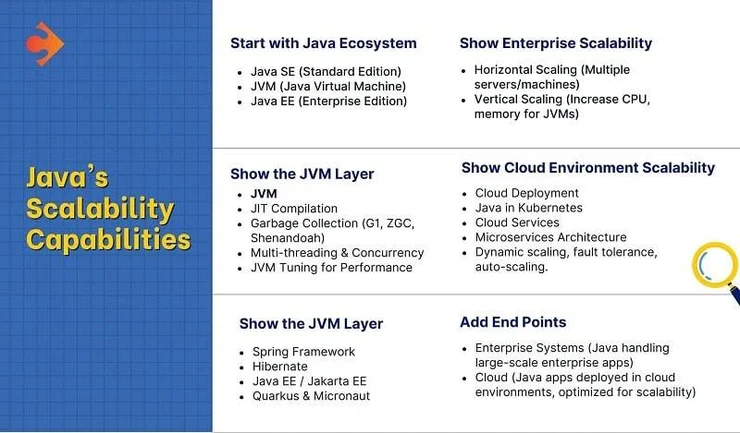
With the release of Java 21, Virtual Threads (Project Loom) have revolutionized Java Threads. In traditional Java EE servers, a thread was required for every concurrent request. This limited scalability. Virtual threads are lightweight, allowing applications to handle millions of concurrent connections with high throughput. While the code looks like synchronous code, the JVM handles the non-blocking nature under the hood. This is a game-changer for Java Scalability and Java Performance optimization.
Apple TV 4K with remote – Apple TV 4K 1st Gen 32GB (A1842) + Siri Remote – Gadget Geek
Section 4: Best Practices and Optimization Strategies
Modernizing a Java Enterprise system is not just about code; it is about the ecosystem. To ensure your application is production-ready for 2025 and beyond, consider the following best practices.
1. Security First
Security cannot be an afterthought. Implement Java Security standards like OAuth Java and JWT Java (JSON Web Tokens) for stateless authentication, especially in microservices. Use libraries like Spring Security or the Jakarta Security API to handle authentication and authorization. Ensure sensitive data is encrypted using standard Java Cryptography libraries.
2. Testing and Quality Assurance
Legacy applications often lack test coverage. As you modernize, enforce strict testing protocols. Use JUnit 5 for unit tests and Mockito for mocking dependencies. For integration testing, Testcontainers is an invaluable tool that spins up Docker containers (databases, message queues) during the test phase, ensuring your code works against real infrastructure components.
3. Containerization and DevOps
Apple TV 4K with remote – Apple TV 4K iPhone X Television, Apple TV transparent background …
The days of manually deploying WAR files to a server are fading. Adopt Java DevOps practices. Package your application using Docker Java images. Use CI/CD Java pipelines (Jenkins, GitHub Actions, GitLab CI) to automate testing and deployment. If you are deploying to the cloud, orchestrate your containers using Kubernetes Java configurations. This ensures consistency between development, staging, and production environments.
4. Database Optimization
Java Database interactions are often the performance bottleneck. Use Hibernate statistics to detect “N+1 select” problems. Utilize connection pooling (like HikariCP, default in Spring Boot) effectively. When using JDBC directly or via JPA, ensure you are fetching only the data you need. For read-heavy operations, consider projection interfaces or DTOs instead of fetching entire managed entities.
Conclusion
The landscape of Java Enterprise is vibrant and evolving. While Java EE 8 served us well, the future belongs to Jakarta EE, Spring Boot, and cloud-native architectures. Modernization is not merely a technical upgrade; it is a strategic move to unlock the performance of Java 21, the agility of Java Microservices, and the scalability of the cloud.
By understanding the namespace migration, mastering modern REST implementations, and leveraging advanced features like Streams and Virtual Threads, developers can ensure their applications remain robust and maintainable. The clock is ticking on legacy support, but with the tools and patterns outlined in this article, the path to a modern, efficient, and secure enterprise architecture is clear. Start planning your upgrade today—your future self (and your ops team) will thank you.